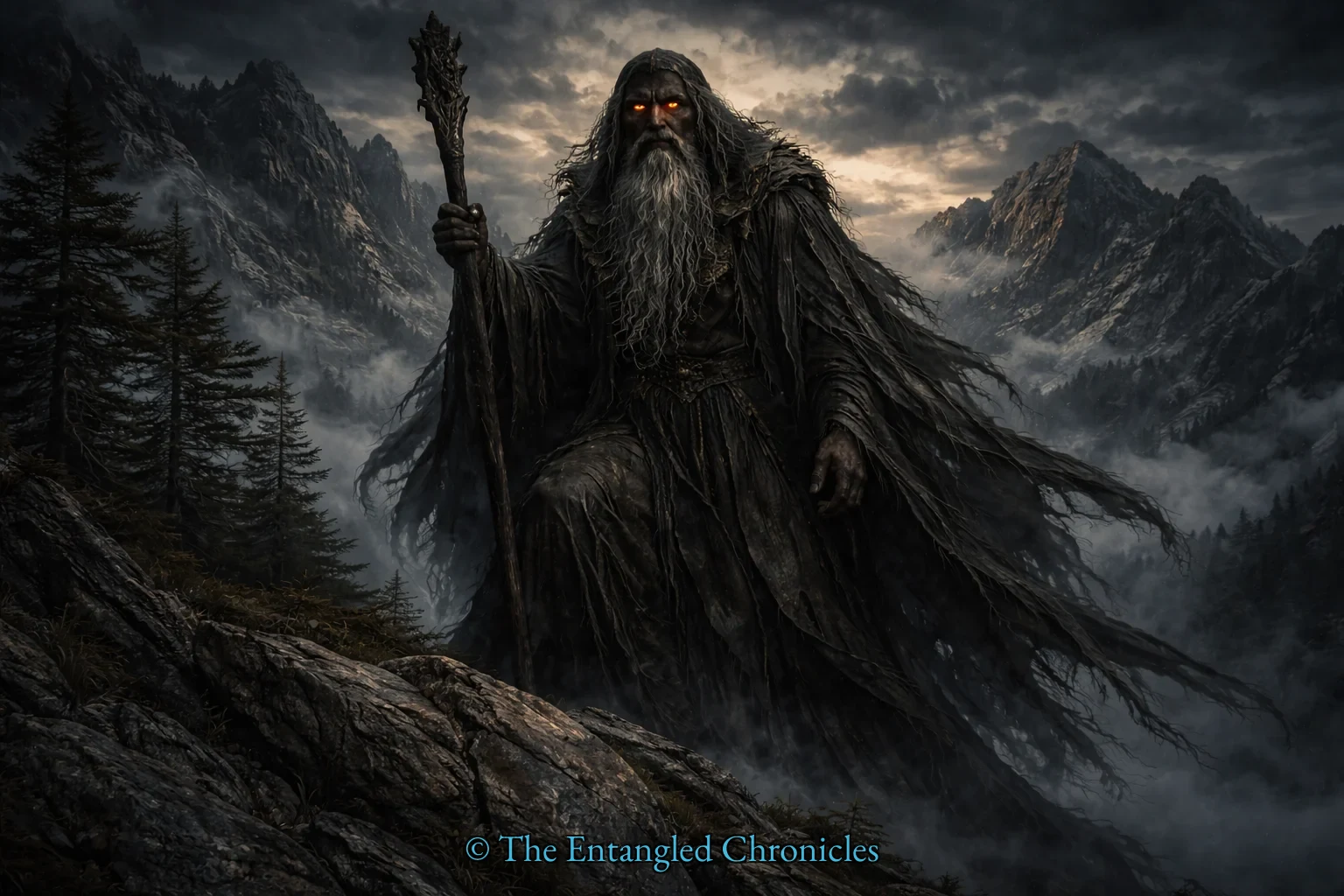
The most famous modern inheritor of Berggeist traditions is undoubtedly J.R.R. Tolkien, whose works drew heavily on Germanic and Norse mythology. Two of his most iconic creations—Gandalf the wizard and the dwarves of Middle-earth—have well-documented connections to mountain spirit folklore.
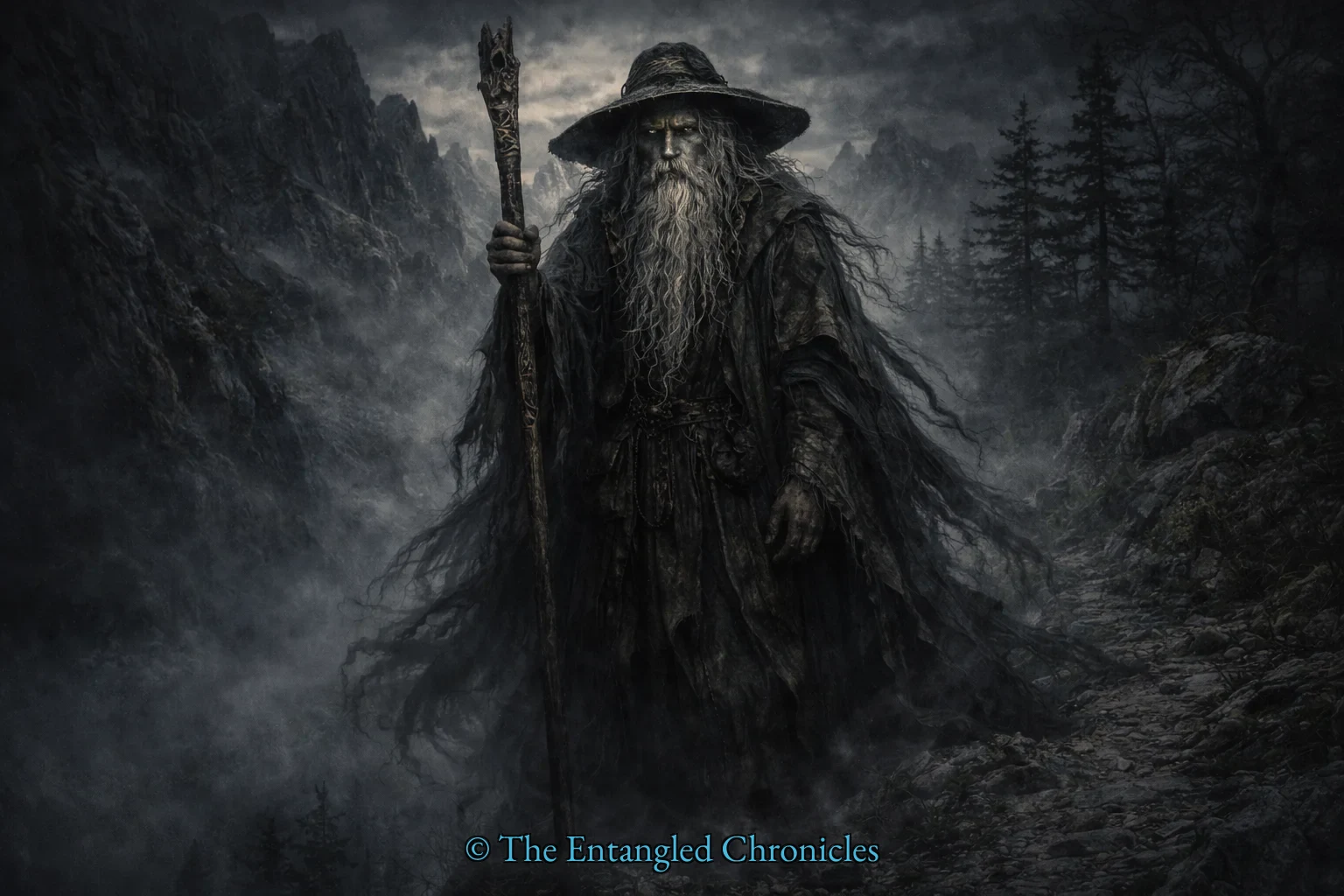
The connection to Gandalf is particularly specific and well-attested. While on holiday in Switzerland, Tolkien purchased a postcard showing Josef Madlener's painting "Der Berggeist," which depicted an old man with a long white beard and a large hat standing in a mountainous landscape. Biographer Humphrey Carpenter initially dated the painting itself to 1911, but later scholarship by Manfred Zimmerman (1983) established the painting was created in the mid-1920s, with Tolkien likely acquiring the postcard around 1925-1927. Tolkien wrote on this postcard "Origin of Gandalf," explicitly acknowledging the image as inspiration for his wizard.
The painting's title—"Der Berggeist"—literally means "the mountain spirit," directly connecting Gandalf's visual conception to this Germanic tradition. While Tolkien drew on many sources for Gandalf's character (including the Norse figure Óðinn as a wanderer), the visual template came from this representation of a German mountain spirit. The long beard, the walking staff, the weather-beaten appearance, and especially the distinctive pointed hat all appear in traditional depictions of Berggeist, particularly the wandering mountain lord types like Rübezahl.
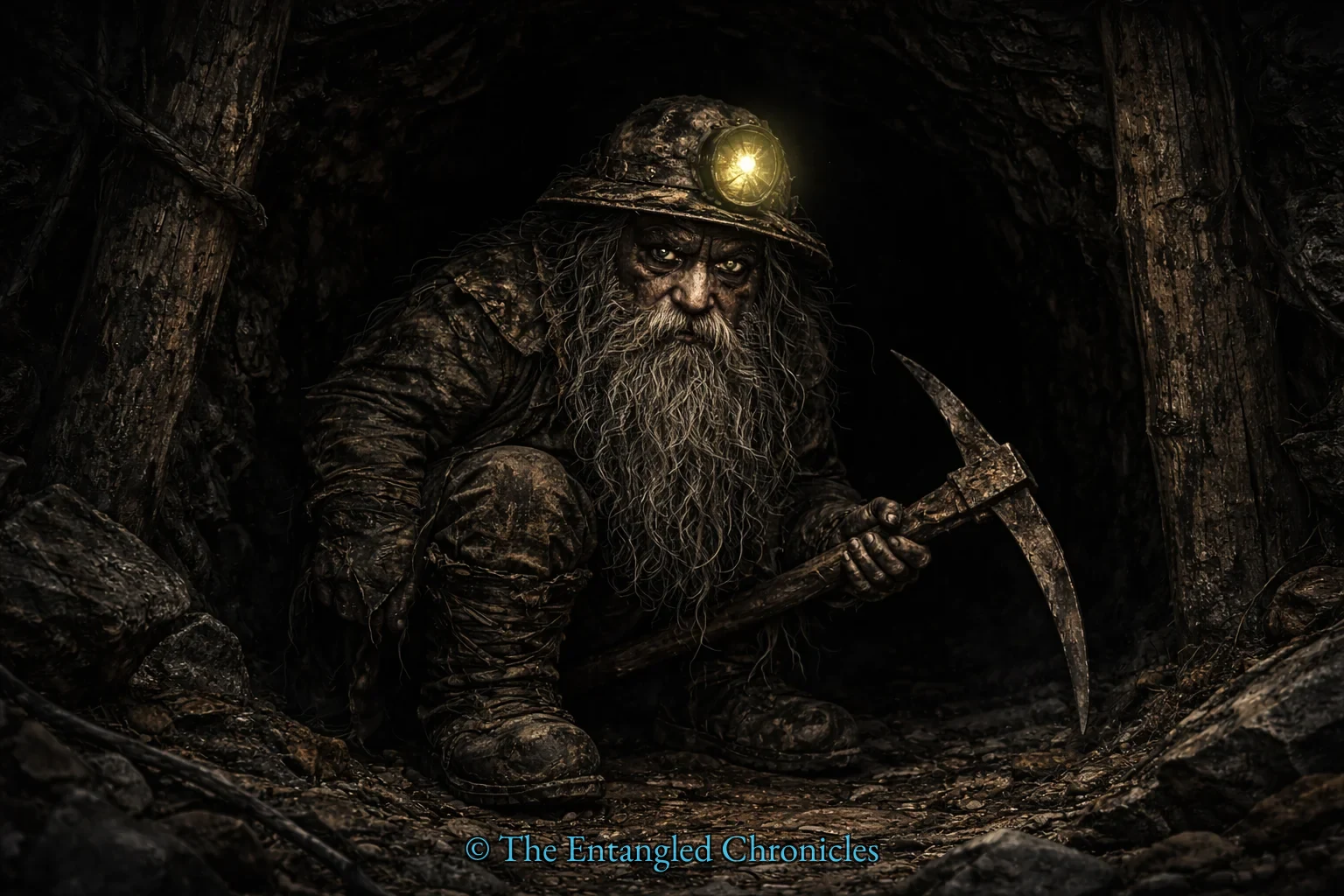
Tolkien's dwarves show equally clear influence from Bergmännchen and related Germanic mining spirit traditions. He took his dwarf names directly from the Dvergatal, the "Catalogue of Dwarves" in the Norse Eddic poem Völuspá—but their characterization as master craftsmen, miners, and workers in precious metals comes straight from Germanic Bergzwerg traditions. Like the Bergmännchen, Tolkien's dwarves live in mountain kingdoms, possess ancient metalworking knowledge, and maintain complex relationships with other peoples.
The temperament Tolkien gave his dwarves—proud, secretive, somewhat greedy, fierce in defence of their honour, capable of both great generosity and stubborn grudge-holding—mirrors the dual nature of kobolds and Bergmännchen in folklore. They are neither purely good nor evil, but beings with their own cultures, motivations, and moral frameworks that don't always align with human values.
Tolkien's deep scholarly knowledge of Germanic languages and folklore (he was a professor of Anglo-Saxon at Oxford) meant these borrowings were intentional and informed rather than casual appropriations. He understood the cultural contexts from which these traditions emerged and deliberately created a mythological framework that honored those sources while transforming them into something new. Through Tolkien's immense influence on modern fantasy, Berggeist traditions continue to shape how contemporary culture imagines mountain spirits, wizards, and dwarves.
Other fantasy authors have followed Tolkien's example, drawing on Germanic mountain spirit lore for their own works. Yet few have matched his combination of scholarly accuracy and creative transformation. Despite widespread recognition of Tolkien's dwarves and Gandalf, relatively few recognise their origins in the ancient Germanic Berggeist—the very spirits who once haunted the mines of the Harz and guarded the peaks of the Alps.